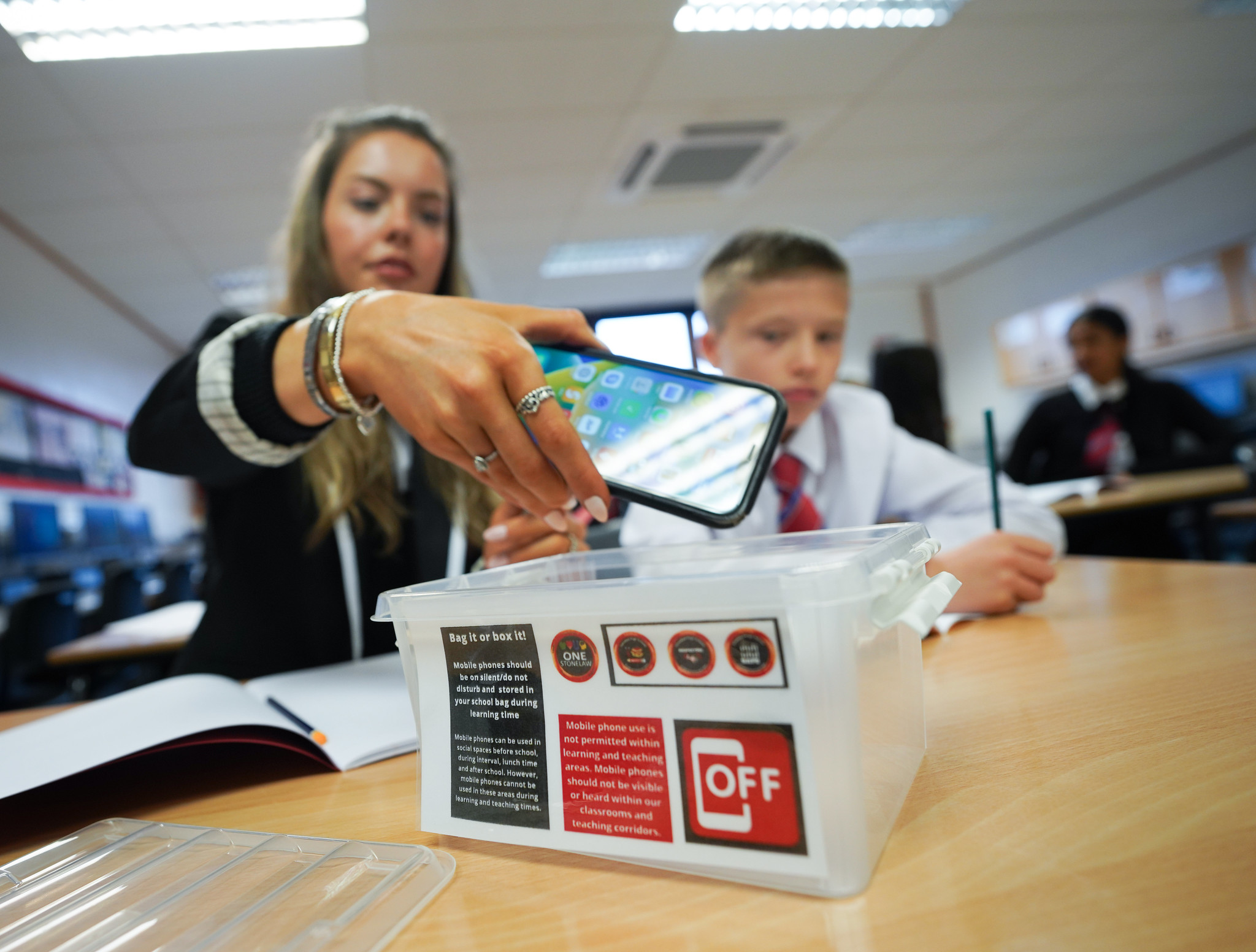
Something remarkable happened between 2023 and 2026. The percentage of countries restricting phone use in schools nearly doubled, jumping from 23% to 40%. What was once a fringe policy championed by a handful of European nations has become a global movement spanning every continent. For schools still debating whether to act, the question is no longer if but how.
The 2026 Tipping Point
The numbers tell a clear story. In just three years, phone restrictions in schools went from the exception to the norm. More than 30 countries now have national or regional bans in place, and the list keeps growing.
What changed? A combination of mounting research on phone distraction, pressure from parents and teachers, and high-profile success stories from early adopters. When Australia reported that 87% of principals saw reduced classroom distraction after their ban, other governments took notice.
Country-by-Country: What's New in 2026
The past 12 months brought major policy shifts across every region. Here's what happened.
United States: Texas Joins the Wave
In January 2026, Texas Governor Greg Abbott signed House Bill 1481, banning students from using personal communication devices during school hours across all public and charter schools. Texas joins Florida, Indiana, and a growing list of states with statewide restrictions. The momentum at the state level reflects a broader national shift: parents and educators are tired of competing with smartphones for students' attention.
South Korea: Asia's Biggest Move
South Korea passed legislation in August 2025 banning mobile phones and digital devices in public school classrooms, with enforcement beginning in March 2026. Given South Korea's reputation as one of the world's most digitally connected societies, this move sent a powerful signal to the rest of Asia.
Singapore: Full Ban for All Schools
Singapore's Ministry of Education rolled out phone restrictions in phases: primary schools from January 2025 and secondary schools from January 2026. Students must switch off and surrender all mobile phones and smartwatches upon arrival at school. The policy applies to both public and private institutions.
Brazil: National Law for 50 Million Students
Brazil's president approved a law banning phone use throughout the school day in both public and private schools, citing the need to "safeguard the mental, physical and psychological health of children and teenagers." With over 50 million students affected, it's one of the largest phone ban implementations globally.
Finland: The Latest European Addition
Finland passed legislation allowing phone use in class only for healthcare or learning purposes. For a country long celebrated for its progressive education system, this marks a significant acknowledgment that unrestricted phone access harms learning.
"Technology in education must be for the benefit of learners. Where it does not, we must have the courage to restrict its use. Smartphones in classrooms have become a distraction rather than a tool."
What the Data Shows: Results from Early Adopters
Countries and states that implemented bans early are now reporting their first wave of results. The data paints a compelling picture.
Australia: One Year Later
Australia banned phones in all state schools and many private schools nationwide. After 12 months, the results speak for themselves:
- 81% of educators report improved student learning
- 87% of principals say students are less distracted in class
- 86% of principals report improved student socializing
- 93% of school leaders in South Australia say less staff time is spent on phone-related issues
The majority of staff and parents also reported increased focus during lessons and more positive break time activities. Students who previously spent recess scrolling now play sports, talk to friends, and engage in group activities.
Vietnam: HCMC Pilot Expands to 500+ Schools
Ho Chi Minh City's 16-school pilot program, launched in October 2025, delivered strong results: passive phone use dropped sharply, over 80% of students joined at least one break-time activity, and nearly 98% of surveyed parents supported the approach. Over 70% of students agreed to limit phone use when given attractive alternatives like sports, games, and reading corners.
Based on these results, the HCMC Department of Education expanded the program to 500+ secondary and high schools starting January 2026. The approach focuses on replacing screen time with movement-based games, sports, performances, and quieter options like chess and drawing.
"Restricting the use of mobile phones during recess is not a ban, but aims to guide positive behavior, increase direct interaction, promote physical activity, and care for students' mental health."
How Schools Are Implementing Phone-Free Policies
Not all phone bans look the same. Schools around the world are using different approaches depending on their resources, culture, and goals.
Lockable Phone Pouches
Students place their phone in a pouch at the start of the day. The pouch locks magnetically and can only be opened by staff using a detacher. Students keep their phone on them all day, but cannot access it. This eliminates the need for collection and storage, and reduces theft concerns. This is the approach used by ZenLocked and similar providers like Yondr in the United States.
Phone Lockers and Storage
Some schools provide dedicated lockers or cubbies where students deposit phones on arrival. This works well for smaller schools but creates logistical challenges at scale: check-in/check-out queues, lost phone concerns, and liability issues.
Policy-Only Bans
The simplest approach: schools announce a ban and rely on enforcement by teachers. While low-cost, this method puts the burden on staff and creates constant friction. Research shows that physical enforcement tools like pouches are significantly more effective than policy-only approaches because they remove the temptation entirely.
What This Means for Your School
If your school hasn't implemented a phone restriction yet, you're now in the minority. The global trend is clear, the data is in, and parents overwhelmingly support it. Here's what to consider:
- Start with a pilot — test with one grade level or during break times before going school-wide
- Communicate with parents — the data shows 98% parent support when the rationale is explained clearly
- Provide alternatives — success depends on offering engaging activities to replace screen time
- Use physical tools — lockable pouches remove enforcement burden from teachers
- Measure results — track behavior, engagement, and academic outcomes before and after
The schools seeing the best results are those that frame the phone restriction not as a punishment, but as an opportunity to reconnect. When students put their phones away, they rediscover conversation, play, and focus. That's not a loss. That's a gain.
Related Articles
Ready to Create Phone-Free Spaces?
ZenLocked provides lockable phone pouches trusted by schools across Southeast Asia. Simple to implement, no confiscation needed, and students keep their phones on them all day.
REQUEST A CONSULTATION